Published
What Drives the Price
The door leaf itself is only part of it. The frame, the locking, the glazing and any sidelights all move the figure, and a door with a glazed sidelight is a substantially bigger job than a solid one in the same opening.
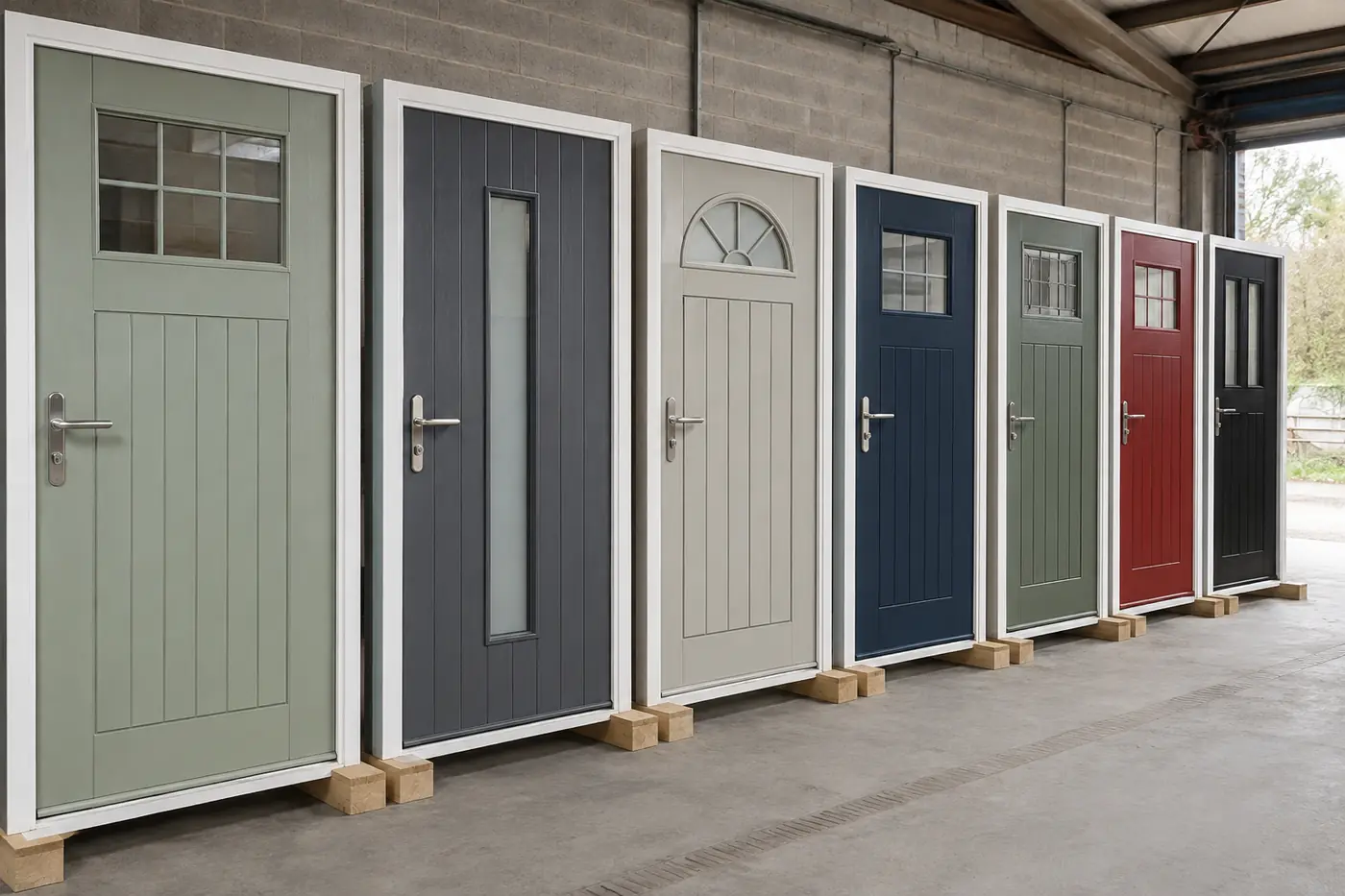
Colour and glass choice mostly affect lead time rather than price, though non standard colours can add both.
The size of the structural opening matters more than the door. A standard opening takes a standard frame. A wider one, or one with a fanlight above, needs a made to measure frame and often work to the lintel or the reveal, and that is where a straightforward job becomes a builders job.
Whether the old frame comes out cleanly is the other variable nobody can price from a photograph. An old timber frame built into the blockwork behaves very differently to a later uPVC one screwed into a fixed opening, and the second is far quicker.
What Separates a Good Door From a Cheap One
The core. A composite door is a skin over a core, and the core is what decides whether it holds heat and whether it stays flat over years of sun on one face.
The locking. A multipoint lock engaging at several points along the frame is standard and worth confirming.
The threshold. A low threshold is easier to live with and harder to get right, particularly on a door facing driving rain.
Cores vary more than the brochures suggest. A solid timber core is dense and rigid but conducts more heat than a foam core, while a foam core insulates better and depends on its reinforcement to stay flat. What you are really asking is what stops the door bowing when one face is in the sun and the other is at room temperature, because a bowed door stops locking cleanly and no amount of adjustment fixes it.
The skin thickness is the other quiet difference. A thicker outer skin resists knocks and dents from bikes, buggies and weather, and it is one of the few things you can actually feel by pressing the face of a display door in a showroom.
Security and What the Locking Should Be
The cylinder is the part most people never ask about. Ask what standard the cylinder meets and whether it is anti snap.
A multipoint mechanism should engage at several points up and down the frame rather than at the handle alone, which spreads any force across the whole frame rather than one spot.
Hinges should be adjustable and, on an outward opening door, they should have hinge bolts so the door cannot be lifted off if the hinge pins are attacked.
Ask whether the glazing is bonded or beaded, and if beaded, whether the beads are internal. Beads on the outside can in principle be removed from the outside, which is exactly the wrong side for them to be on.
Thresholds, Weather and Which Way the Door Faces
Which direction the door faces changes what it needs, and it is the single most useful thing to tell the contractor at the survey.
A door taking the prevailing weather needs a threshold and a seal specified for it. On the Atlantic seaboard, in Mayo, Galway and Donegal, rain arrives horizontally and under pressure, and a low threshold chosen purely for looks will let water track under it. A weathered threshold with a proper upstand, or a small porch or canopy above, is the difference between a dry hall and a wet one.
Salt is a separate problem to rain. In Clare and Kerry, handles, letterplates, knockers and hinges corrode years ahead of schedule, so the ironmongery specification matters as much as the door. Ask for a corrosion resistant finish rather than the standard one.
Inland, in the commuter counties around Dublin such as Kildare and Meath, weather is rarely the driver. Doors there get replaced because they are dated or draughty rather than because they have been beaten, and a low level threshold for accessibility is usually an easier choice to make.
If you want a genuinely level threshold for a wheelchair or a buggy, say so early. It is achievable, but it needs drainage designed in front of it, and that is a decision made before the door is ordered rather than after.
Sidelights, Fanlights and Glass
A sidelight lets in more light, but it may add cost because the frame and the opening may change.
Where glass sits beside a door or within reach of a stairs, the Building Regulations may require it to be toughened or laminated. Check the current requirements in Technical Guidance Document Part N and ask your contractor which standard applies. That is not an upsell.
Obscure glazing patterns are worth seeing in person rather than choosing from a swatch. The amount of light a pattern lets through and the amount of privacy it gives vary far more than the small samples suggest.
Anything unusual in colour or glass adds lead time rather than just cost. If a date matters, ask what is actually held in stock before you fall in love with a finish.
Fitting and Making Good
Taking out an old door frame disturbs the plaster inside and the render outside. Confirm what is included before you order, in the same way you would for windows.
A front door is at eye level and people look directly at it, so the finish around it is more noticeable than around any window. A neat band of made good render, painted to match, is what separates a job that looks finished from one that looks patched.
Ask what happens to the old door and frame. Disposal is either in the price or it is yours.
Ask too whether the fit includes transferring or replacing the ironmongery you intend to keep, and whether the new lock will be keyed alike with any other door. Sorting that at order stage is usually simpler than sorting it afterwards.
If you are pricing this alongside windows, get both quoted together by a contractor registered in your county. It may be one survey, one delivery and one visit, so you may save on survey and delivery. Ask for a combined quote to see.
Back Doors, Side Doors and Matching Them Up
Most houses have more than one external door, and the sensible specification is rarely the same for all of them.
A front door is seen, so it carries the appearance. A back door is used, often many times a day with wet hands and full arms, so what matters there is that the handle is comfortable, the threshold takes muddy boots and the lock does not stiffen. A composite front door with a uPVC back door is a pairing many people choose.
Security deserves more thought at the back than the front, not less. Back and side doors are usually less overlooked, and a side door into a garage or utility is often the weakest point on the house while having had the least money spent on it.
If you are matching a back door to a front door, match the colour and the ironmongery finish rather than the material. Two doors in the same shade with the same handle finish read as deliberate. Two doors in slightly different shades of the same colour read as a mistake, and that is what happens when they are ordered a year apart from different suppliers.
Doors on exposed elevations need the same weather thinking as the front. A back door facing the prevailing wind in Clare or Kerry takes the same salt and driving rain, and it usually has no porch or canopy over it to help.
Getting them all quoted at once is worth doing even if you only fit one now. It is one survey, the specification stays consistent, and you will know what the second door costs before you decide whether to wait.