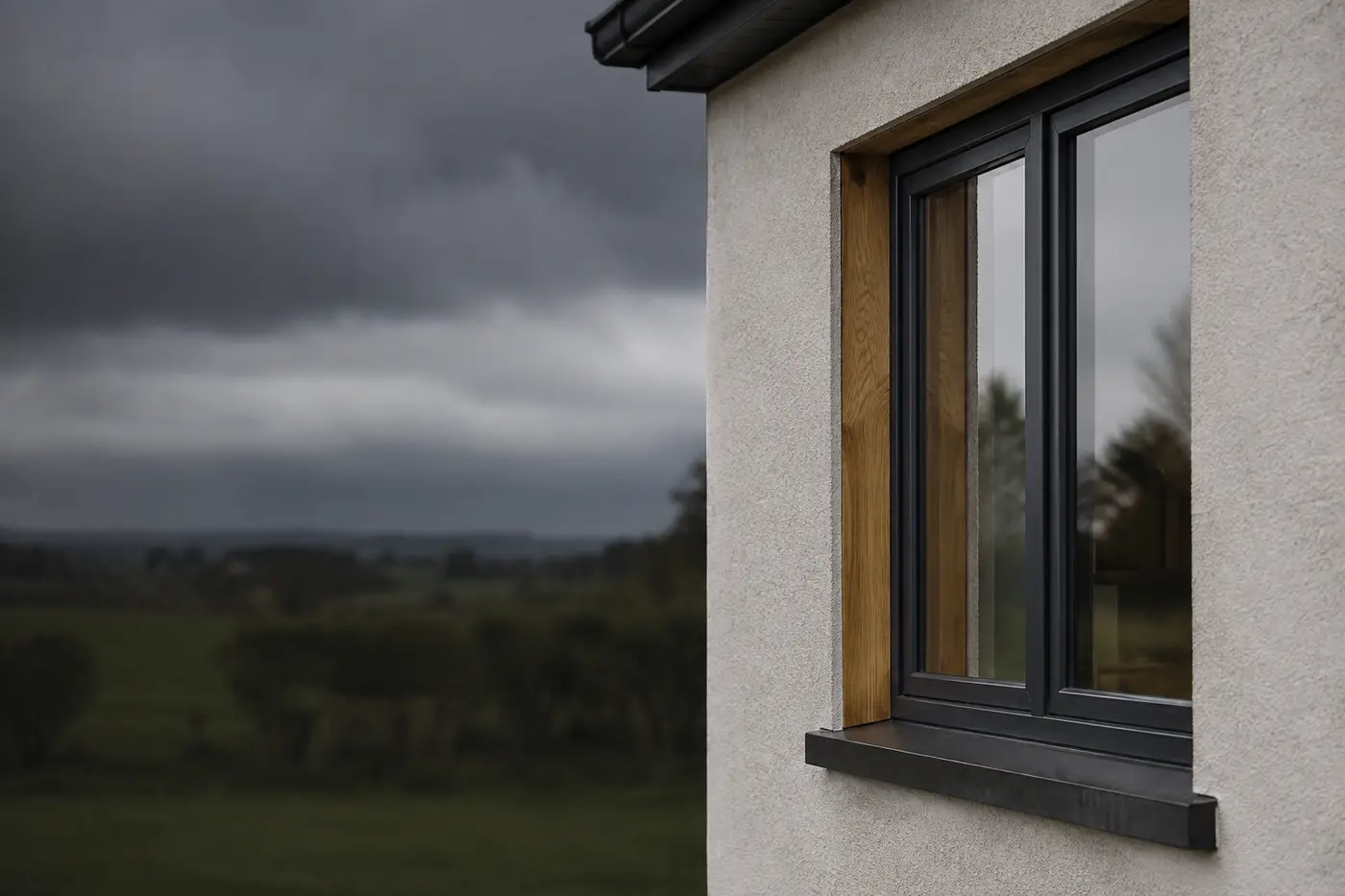
Aluclad
Timber inside, an aluminium skin outside. No exterior painting, slim sightlines, and the longest service life of the common options.
Best for exposed and coastal sites, and new builds where looks matter.
Aluclad and timber windows in Ireland, from contractors on the SEAI public register. Often chosen for exposed sites and period houses.
Most Irish houses get uPVC, and for most Irish houses that is correct. Aluclad and timber are the answer in two specific situations, and it is worth knowing which one you are in.
The first is exposure. On the Atlantic coast, through Donegal, Mayo, Galway, Clare and Kerry, sustained wind and salt shorten the life of everything. Aluclad handles it better than uPVC and holds a factory finish that does not need painting.
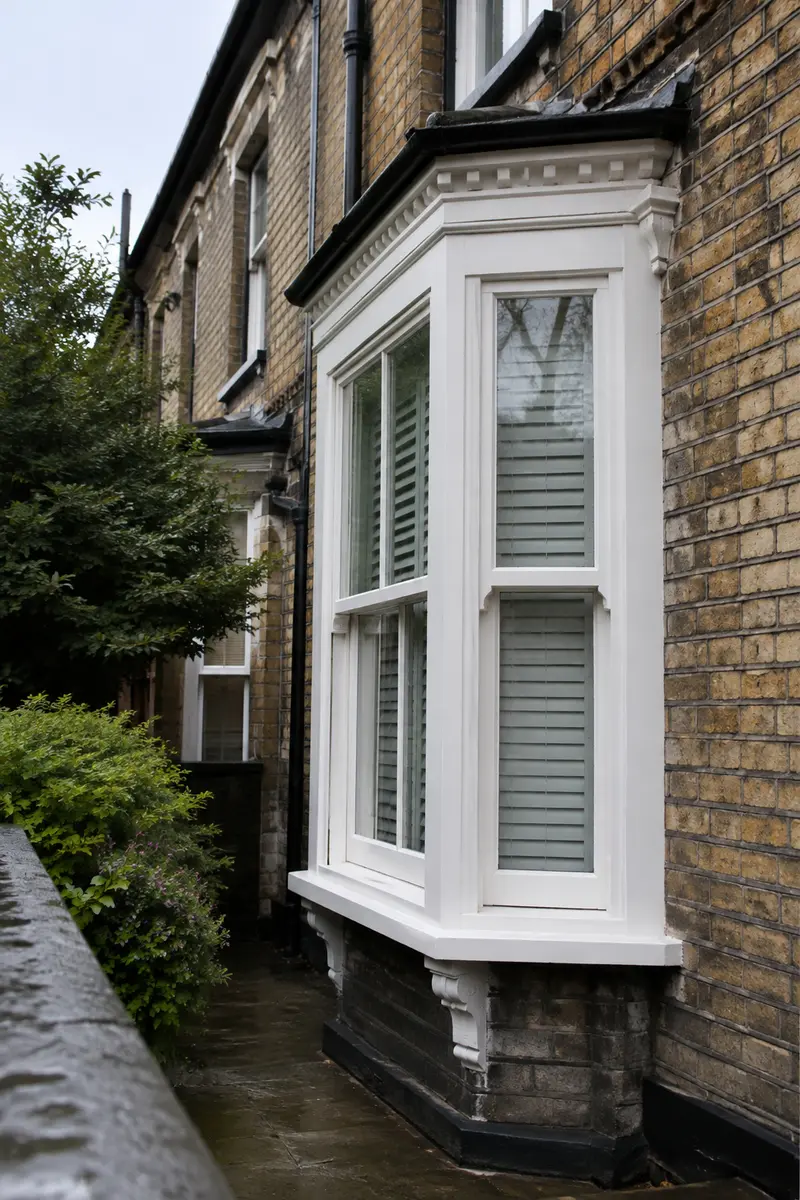
The second is appearance and planning. A protected structure or a house in a conservation area will often only be permitted timber, and even where uPVC is allowed, a chunky frame section rarely sits right in an opening designed for sash.
Timber inside, an aluminium skin outside. No exterior painting, slim sightlines, and the longest service life of the common options.
Best for exposed and coastal sites, and new builds where looks matter.
Timber inside and out. A traditional look, at the cost of painting every few years.
Best for period houses. Check with your local authority before changing windows in a protected structure or an architectural conservation area.
Replacement or refurbished sash with cords, weights and draught sealing. Priced per window rather than per house, because no two openings match.
Best for Georgian and Victorian houses where proportion matters.
With aluclad, the aluminium outside is not the part that ages. The timber inside is, and that is entirely within your control because it is out of the weather.
With full timber, it is the painting cycle and nothing else. Keep it up and a timber window outlasts everything; skip it for a few years and the sill goes soft, which is the most common repair on older Irish houses.
On a coastal site, the hardware fails first regardless of frame material. Salt corrodes handles, hinges and locking mechanisms years ahead of schedule. Ask for marine grade fittings specifically, because they are not usually the default.
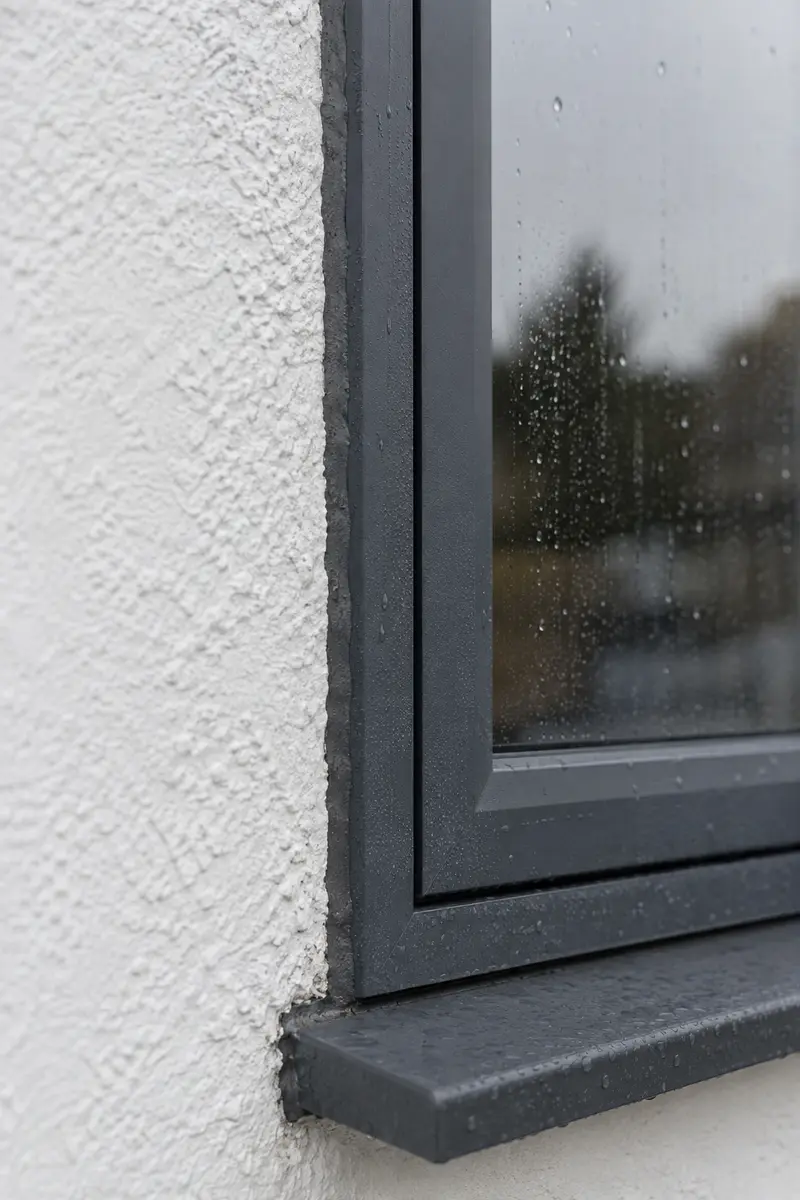
And in every case, the perimeter seal decides how the window actually performs. A beautifully made frame sealed badly into the wall will be draughty.
Aluclad is a timber window with an aluminium skin on the outside face. You get timber inside the room, where it is seen and where it insulates, and a powder coated aluminium shell outside, where the weather is.
The point of it is maintenance. The aluminium takes the rain, the sun and the salt, so the timber behind it never needs painting on the outside. That is the whole proposition, and on an exposed or coastal site it is a strong one.
The two materials move at different rates with temperature, so the cladding is clipped rather than glued and there is a deliberate gap behind it. A drainage path through that gap is part of a properly made unit, and it is worth asking about.
Sightlines are typically slimmer than uPVC for the same opening, because timber is stronger than plastic and needs less section to carry the same pane. On a large window that difference is visible.
Full timber windows need repainting, and any contractor who tells you otherwise is selling rather than advising. The honest figures depend far more on exposure than on the timber.
A sheltered inland elevation may go several years between coats. A south or west facing wall taking weather goes considerably less, and a coastal site less again. The first sign is always the same: the finish goes chalky and loses its sheen before it ever peels.
Catching it at that stage is a wash and a coat. Leaving it until the finish breaks lets water into the timber, and at that point you are into filling and possibly splicing, which is a different order of work and cost.
This is exactly the calculation aluclad removes, and it is why aluclad tends to cost more up front. Whether that trade is worth it depends on the elevation and on whether anyone is realistically going to do the painting.
This is where timber stops being a preference and becomes a requirement.
If the house is a protected structure, works affecting its character generally need consent, and the windows are part of that character. If it sits in an architectural conservation area, the rules usually apply to what is visible from the public road, which is normally the front elevation.
What is typically required is genuine slim sections, correct sash proportions and putty line detailing, none of which standard uPVC can deliver. Sliding sash in timber, made to the original proportions, is often the only acceptable answer.
The local authority is the authority here, not the contractor. Speak to the conservation officer before you order anything, because made to measure frames cannot be sent back. The material comparison covers what each option is actually like to own.
Contractors are listed by registered address, from the SEAI register and other public records.
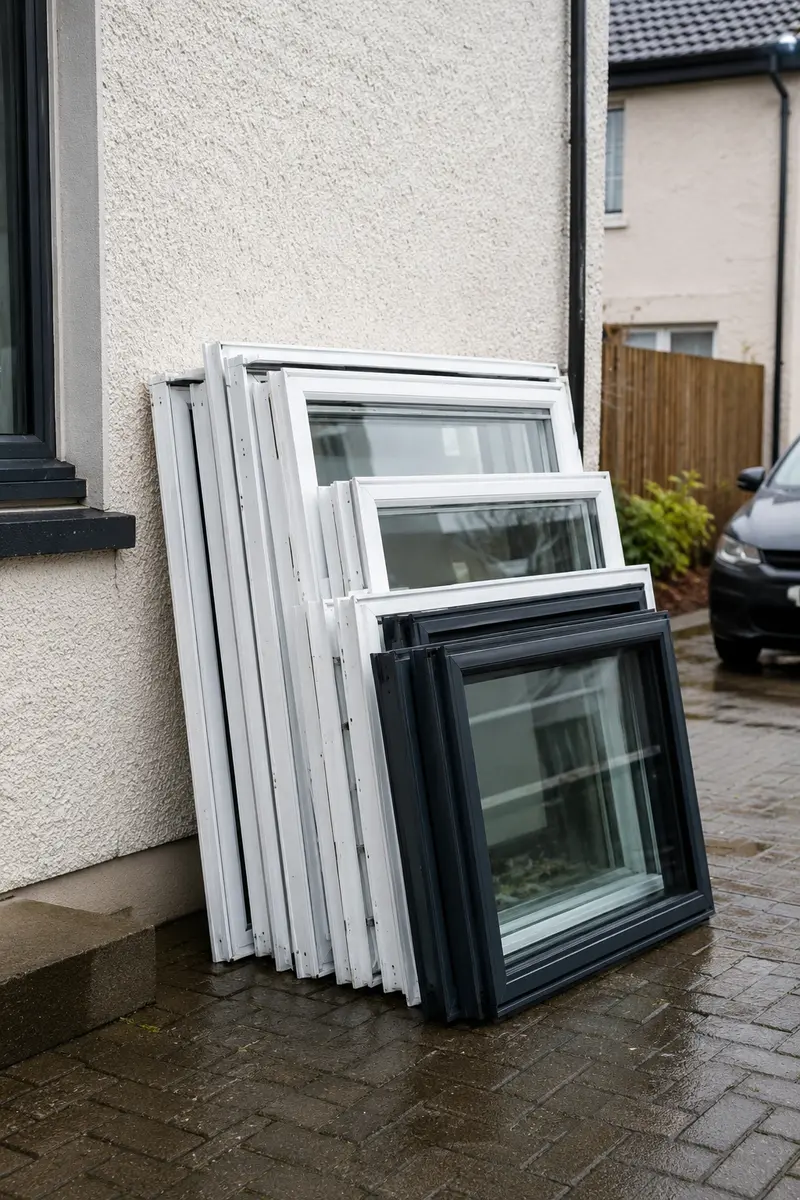
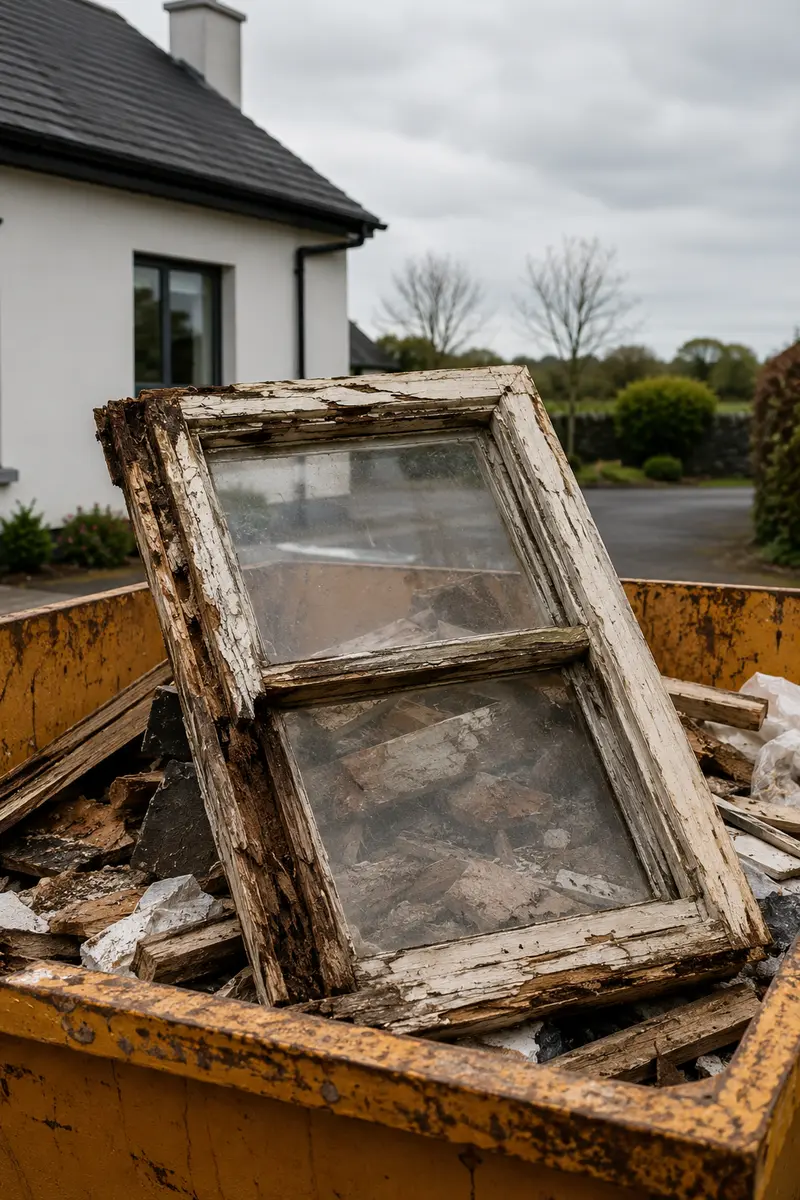
Four stages, and the two in the middle are where a cheap quote saves its money. Almost nothing fails through the glass: it goes at the joint where the frame meets the wall, and it is the making good that gets left out.
On an exposed site, or where slim sightlines matter to how the house looks, usually yes. On a sheltered suburban semi the extra often does more elsewhere in the house.
Every few years, and sooner on an elevation taking driving rain. It is the single factor that decides whether timber windows last decades or fail early.
Often not, and it depends on the local authority and whether the structure is protected. Check before ordering anything, because putting it right afterwards is expensive.
Per window, generally yes, because they are made to the individual opening rather than to a standard size. They are priced per window rather than per house for the same reason.
It depends on exposure far more than on the timber. A sheltered inland elevation may go several years between coats, a west facing wall considerably less, and a coastal site less again. The tell is the finish going chalky, and catching it at that point is a wash and a coat rather than repair work.
On an exposed or coastal elevation, or where slim sightlines matter, usually yes. On a sheltered suburban semi where the windows are not the feature, the extra is harder to justify. The honest comparison is in the material guide.
Often not. What is generally required is genuine slim sections and correct sash proportions, which standard uPVC cannot deliver. The local authority decides, so speak to the conservation officer before ordering anything.
The aluminium outside does not need painting, which is the point of it. The timber inside takes normal interior care, and the seals and hardware need the same occasional attention as any window. Washing the outside removes salt on a coastal site and costs nothing.
If the house is protected or in a conservation area, establish what is permitted before you get quotes. It changes what you are pricing, and it is much cheaper to know first.
589 contractors from the SEAI register and other public records
This site uses a visit counter to see which pages are useful. It sets one cookie and is not used to identify you. Nothing is shared with advertisers. How we handle data